

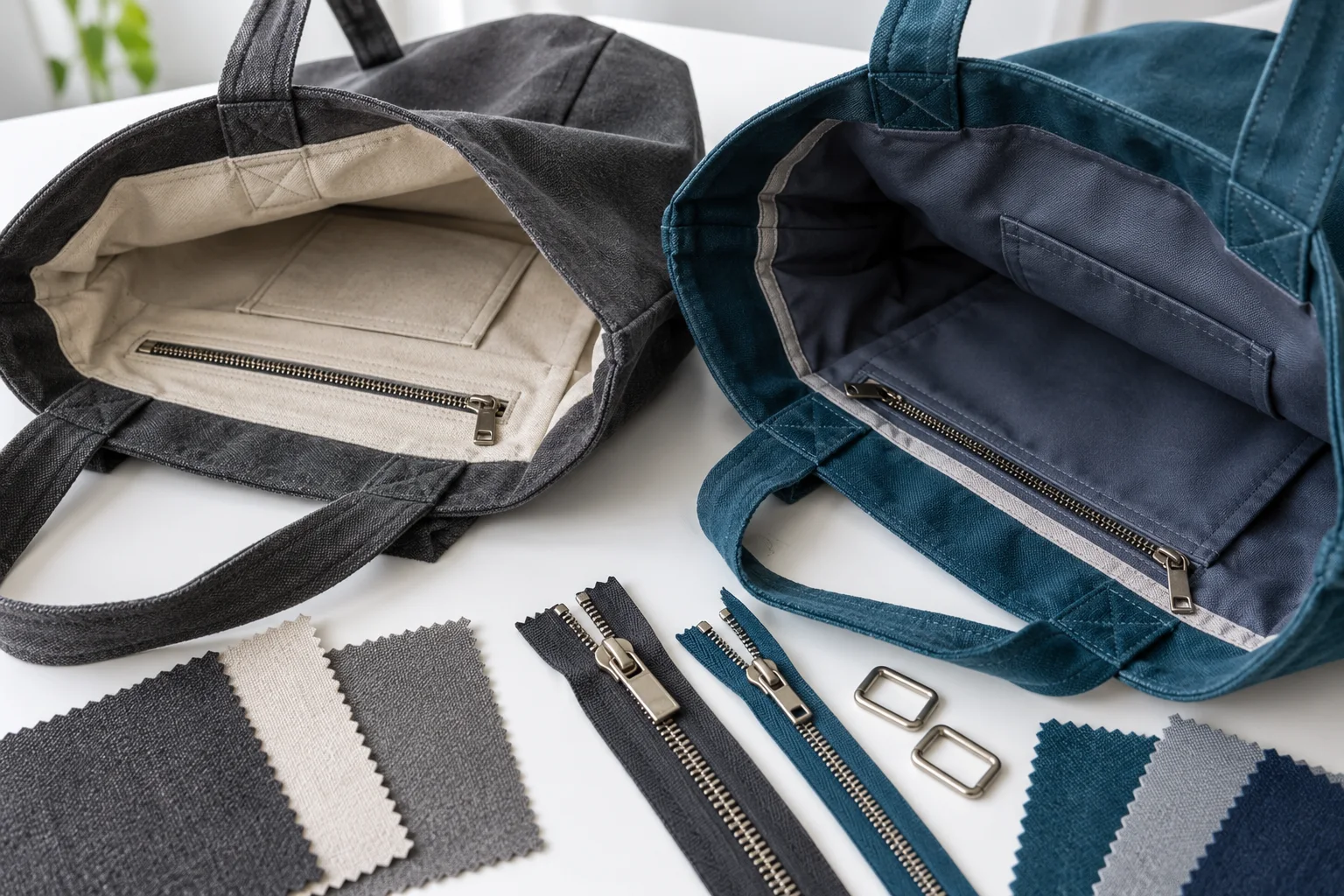
Two quotations for a branded bag might leave fabric weight, lining, zipper components, seam construction and color consistency unstated. Each factory can fill those gaps differently.
Give both suppliers one specification. Ask each to identify what is included, any proposed substitutions, requirements they cannot meet and anything still unconfirmed.
Request cost-saving alternatives separately, so you can see what changes with the price. A cheaper offer may reflect better efficiency or purchasing. It may also reflect different materials, construction or testing. A higher price does not establish better quality either.
Keep an approved reference sample alongside written specifications and measurable acceptance criteria. Confirm whether the sample used the intended production materials, tooling and process.
Agree on checks for incoming materials, early production, production progress and finished goods, matched to the product’s risks. Early checks can identify problems while corrections are still possible; later checks assess what was actually produced.
For each check, establish who performs it, what passes and what happens if it fails. A good sample establishes a reference. Consistent production requires a system for maintaining it.
Compare the price for the agreed product, the work included and the supplier’s ability to deliver consistently. Resolve the material differences before choosing the offer.
Reference: QIMA — Initial Production Check